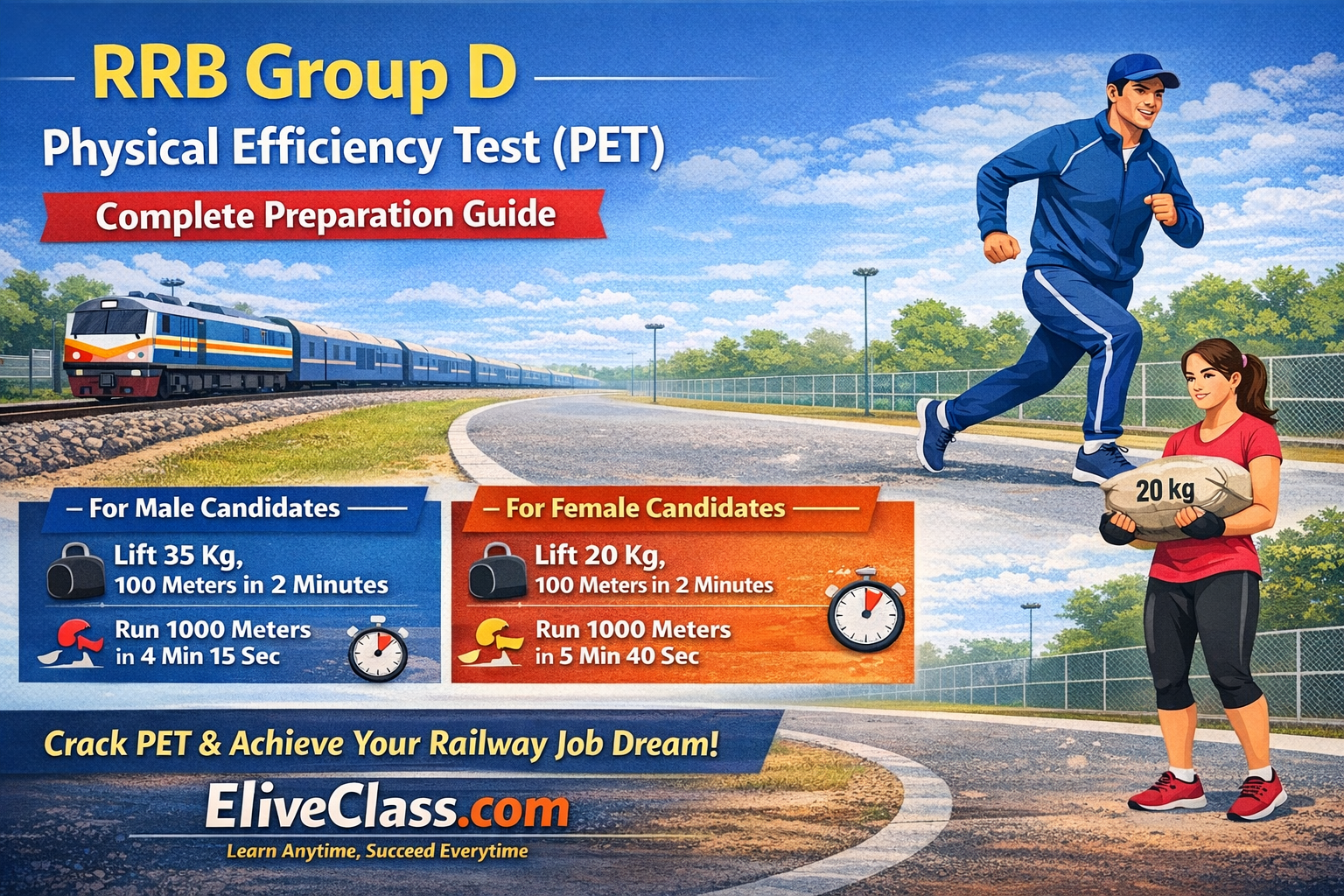
The RRB Group D Physical Efficiency Test (PET) is one of the most crucial stages of the RRB Group D recruitment process. Many candidates clear the Computer Based Test (CBT) but fail to qualify PET due to lack of awareness, preparation, or physical practice. Since PET is mandatory and qualifying in nature, failing it means immediate disqualification, no matter how good your CBT score is.
In this detailed guide by EliveClass.com, you will learn everything about RRB Group D PET, including eligibility, PET criteria, running and weight-lifting standards, preparation tips, common mistakes, and how to clear PET confidently.
What is RRB Group D Physical Efficiency Test (PET)?
The Physical Efficiency Test (PET) is conducted after the CBT to check whether candidates are physically fit to perform railway duties. Group D posts often involve fieldwork, lifting loads, walking long distances, and working in challenging conditions. Therefore, physical fitness is essential.
PET is conducted separately for male and female candidates, with different physical standards.
RRB Group D PET – Important Points
-
PET is qualifying only, no marks are added to merit
-
Only CBT-qualified candidates are called
-
No relaxation in PET standards (except category-specific rules as notified)
-
Failing PET leads to direct rejection
-
Candidates must bring required documents and medical fitness
RRB Group D PET Criteria for Male Candidates
1. Weight Lifting Test
Male candidates must be able to:
-
Lift and carry 35 kg weight
-
Distance: 100 meters
-
Time limit: 2 minutes
-
Weight must be carried without dropping
2. Running Test
-
Distance: 1000 meters (1 km)
-
Time limit: 4 minutes 15 seconds
Both tests must be cleared to qualify PET.
RRB Group D PET Criteria for Female Candidates
1. Weight Lifting Test
Female candidates must be able to:
-
Lift and carry 20 kg weight
-
Distance: 100 meters
-
Time limit: 2 minutes
-
Weight must not be dropped
2. Running Test
-
Distance: 1000 meters (1 km)
-
Time limit: 5 minutes 40 seconds
Medical Fitness and PET
Clearing PET does not mean final selection. Candidates must also be:
-
Medically fit as per railway standards
-
Free from serious physical disabilities
-
Fit in vision, hearing, and general health
Regular physical activity before PET helps not only in running and lifting but also in medical tests.
How to Prepare for RRB Group D PET at Home
PET preparation should ideally start along with CBT preparation, not after the exam.
1. Start Running Practice Early
-
Begin with brisk walking
-
Gradually shift to jogging
-
Practice running daily
-
Increase speed and stamina step by step
Aim to complete 1 km within the required time comfortably, not just barely.
2. Strength Training for Weight Lifting
To clear the weight-carrying test:
-
Practice lifting sandbags or dumbbells
-
Start with lighter weight and increase gradually
-
Strengthen arms, shoulders, back, and legs
-
Practice walking while carrying weight
Proper posture is very important to avoid injury.
3. Focus on Stamina and Endurance
-
Skipping rope
-
Cycling
-
Stair climbing
-
Bodyweight exercises (squats, lunges, push-ups)
These exercises improve overall stamina.
4. Follow a Healthy Diet
-
Eat protein-rich food (dal, eggs, milk, curd)
-
Include fruits and green vegetables
-
Stay hydrated
-
Avoid junk food and smoking
Good nutrition plays a major role in physical performance.
Daily PET Practice Routine (Sample)
-
Warm-up & stretching – 10 minutes
-
Running practice – 20–30 minutes
-
Strength training – 20 minutes
-
Cool-down & stretching – 10 minutes
Practice at least 5–6 days a week for best results.
Common Mistakes Candidates Make in PET
Avoid these mistakes to ensure success:
-
Starting PET preparation too late
-
Ignoring warm-up before running
-
Practicing weight lifting without technique
-
Overtraining leading to injury
-
Not checking footwear and running surface
Discipline and consistency are the keys to clearing PET.
Documents Required During PET
Candidates must carry:
-
PET call letter
-
Original photo ID proof
-
Passport-size photographs
-
Medical fitness declaration (if required)
Failure to produce documents may lead to disqualification.
Why PET Preparation is as Important as CBT
Many candidates think PET is easy and focus only on CBT. However:
-
PET failure rate is high
-
Physical unfitness leads to rejection
-
PET cannot be cleared by last-minute effort
Preparing early gives you a huge advantage over others.
How EliveClass.com Helps RRB Group D Aspirants
EliveClass.com is a trusted platform for RRB exam preparation and guidance.
Benefits for Aspirants:
-
Detailed RRB Group D exam guidance
-
CBT preparation strategy
-
Subject-wise mock tests
-
PET preparation tips and awareness
-
Beginner-friendly explanations
EliveClass ensures that candidates are mentally and physically prepared for all stages of the exam.
Final Words
The RRB Group D Physical Efficiency Test (PET) is not difficult, but it requires early planning, regular practice, and physical discipline. If you start PET preparation alongside CBT study, follow a proper routine, and maintain good health, clearing PET becomes easy.
Remember, PET is the final physical gateway to your dream job in Indian Railways. Prepare smartly, stay consistent, and trust reliable guidance from EliveClass.com to achieve success.