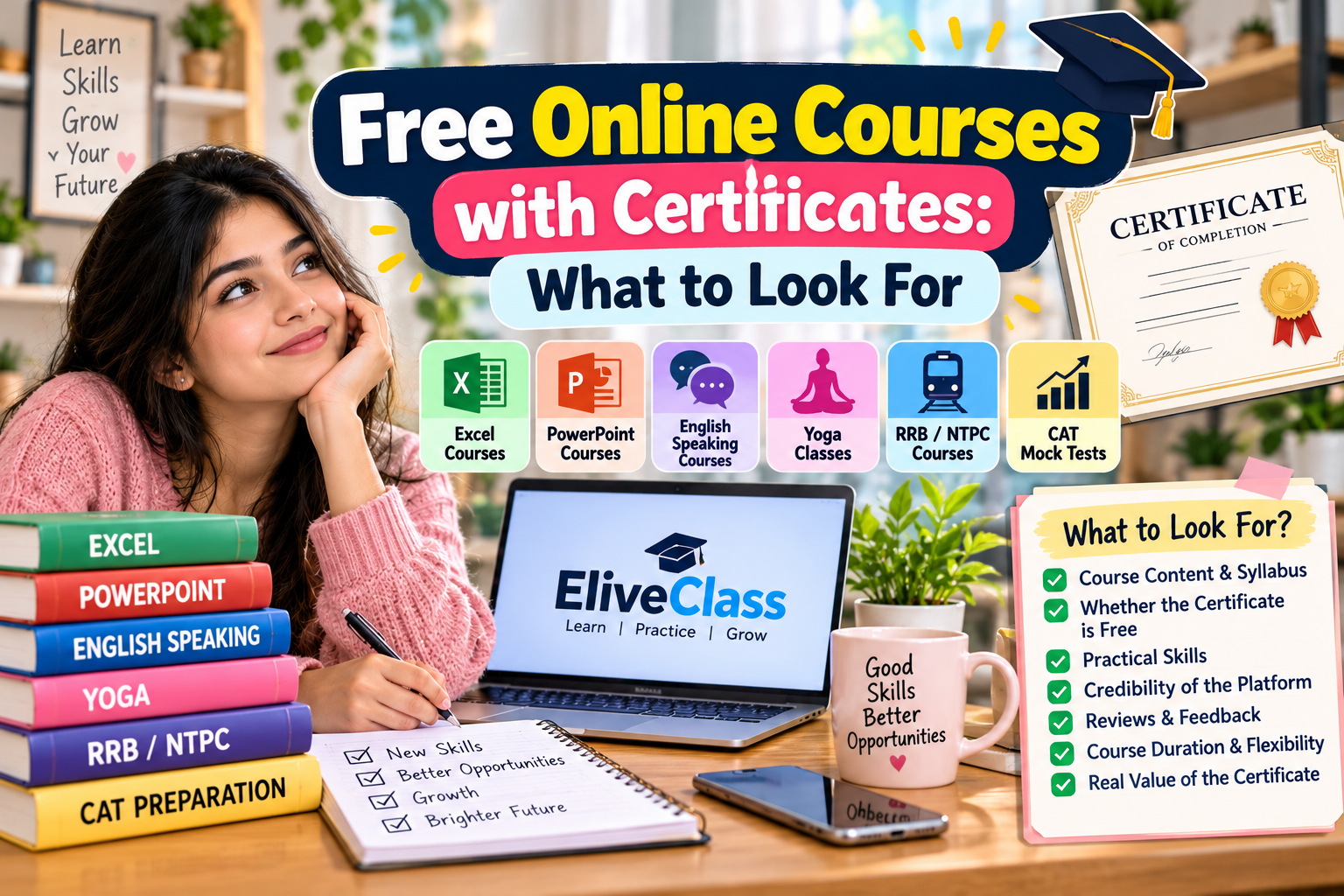
Online learning has become a popular way to develop new skills, improve career opportunities, and gain knowledge from home. Whether you are a student, a job seeker, or a working professional, free online courses with certificates can help you learn valuable skills without spending a lot of money.
However, not every online course offers the same quality, and not every certificate has the same value. Before enrolling in a course, it is important to understand what to look for, how to check course credibility, and whether the learning program matches your career goals.
In this guide, we will explain how to choose the right free online courses and make the most of your learning experience.
What Are Free Online Courses with Certificates?
Free online courses are educational programs that allow learners to study through the internet without paying a course fee. They may cover subjects such as computer skills, communication, business, fitness, competitive exam preparation, and many other areas.
Some courses provide a certificate after completing lessons, assignments, or assessments. Other courses offer free learning materials but charge a fee for the certificate.
Therefore, before enrolling, check whether both the course and its certificate are free or whether additional payment is required.
1. Check the Course Content and Syllabus
One of the most important things to consider is the course syllabus. A good course should explain what you will learn and how the lessons are organized.
Before starting, check whether the course includes beginner-friendly explanations, practical examples, exercises, and relevant topics.
For example, if you want to learn Excel, look for lessons covering formulas, functions, data organization, and basic reporting. Similarly, an English-speaking course should include everyday conversations, vocabulary, pronunciation practice, and speaking exercises.
A clear syllabus helps you understand whether the course meets your learning needs.
2. Verify Whether the Certificate Is Free
The word “free” can sometimes refer only to course access, while the certificate requires payment.
Before registering, look for details about certificate eligibility, completion requirements, assessment fees, and any additional charges.
Ask yourself these questions:
- Is the entire course free?
- Is the certificate included at no cost?
- Do I need to complete a test or assignment?
- Are there any hidden fees or subscription requirements?
Checking these details in advance can help you avoid unexpected expenses.
3. Choose Courses That Teach Practical Skills
A useful online course should help you apply what you learn in real situations. Practical skills can be especially valuable when preparing for a job, improving workplace performance, or studying for an examination.
Consider courses in areas such as:
- Microsoft Excel: Learn formulas, spreadsheets, and data management.
- Microsoft PowerPoint: Develop presentation and slide-design skills.
- English Speaking: Improve everyday communication and workplace conversations.
- Competitive Exams: Practice questions and strengthen subject knowledge for examinations such as RRB NTPC and RRB Group D.
- CAT Preparation: Improve exam readiness through mock tests and practice questions.
- Yoga: Learn basic yoga routines and develop a consistent wellness practice.
Choose a course that matches your current level and supports your personal or professional goals.
4. Check the Credibility of the Course Provider
Before enrolling, research the platform offering the course. Look for clear information about the organization, course instructors, curriculum, and certificate requirements.
If the provider claims that its certificate is officially recognized or accredited, verify that claim through the relevant institution or accrediting organization.
Remember that a certificate of completion does not automatically mean a qualification is officially recognized by employers, universities, or government bodies.
Choose learning platforms that communicate their course details transparently and avoid unrealistic promises about guaranteed jobs or salaries.
5. Read Reviews and Learner Feedback
Reviews can help you understand whether a course is useful and easy to follow. Look for feedback about lesson quality, practical exercises, course difficulty, and the overall learning experience.
Do not rely entirely on testimonials displayed on a course website. Where possible, compare feedback from independent sources.
You should also check whether the course content is updated regularly, especially if you are learning software skills or preparing for a competitive examination.
6. Consider Course Duration and Flexibility
Online courses are particularly useful for learners who need flexibility. You can study before work, after college, or during your free time.
Before selecting a course, check the estimated duration, lesson format, access period, and whether you can learn at your own pace.
A short course may be suitable for learning a specific skill, while a more detailed program may be better for mastering a subject.
Choose a realistic learning schedule and focus on completing lessons consistently rather than enrolling in too many courses at once.
7. Understand the Real Value of the Certificate
A certificate can demonstrate that you completed a course, but its value depends on the subject, provider, assessment process, and the requirements of your target role.
For example, an Excel course certificate may support your resume, but employers may also expect you to demonstrate spreadsheet skills during an interview or practical test.
Similarly, an English-speaking course can help you build communication skills, but regular speaking practice is essential for improving fluency.
Use certificates to support your learning journey, and focus equally on developing skills you can demonstrate.
Benefits of Free Online Courses
Free online learning offers several advantages:
- Affordable education: Learn without paying expensive course fees.
- Flexible schedules: Study at a convenient time.
- Skill development: Learn practical skills for work and everyday life.
- Career preparation: Build knowledge relevant to your chosen field.
- Continuous learning: Explore new subjects and expand your abilities.
The biggest benefit is the opportunity to keep learning without making a large financial commitment.
Explore Learning Resources at EliveClass
If you are looking for accessible learning resources, EliveClass.com offers educational content across multiple categories, including Excel courses, PowerPoint courses, English-speaking learning resources, yoga classes, and competitive exam preparation.
Learners preparing for RRB NTPC, RRB Group D, or CAT can also explore relevant practice questions and mock tests to support their preparation.
Before choosing any course, review the available lessons, learning objectives, and certificate terms to ensure they match your needs. Certificate availability and fees should always be confirmed on the relevant course page.
Whether you want to improve your computer skills, strengthen your English communication, or prepare for an examination, EliveClass can be a useful starting point for exploring learning opportunities.
Conclusion
Choosing the right free online courses with certificates requires more than searching for a course that costs nothing. You should check the syllabus, certificate fees, practical learning opportunities, provider credibility, reviews, and course flexibility.
Most importantly, select courses that help you develop useful skills and work toward a clear goal. A certificate can show your commitment to learning, but the knowledge and abilities you gain are what make your education valuable.
Start with one relevant course, practice what you learn, and continue improving your skills step by step.